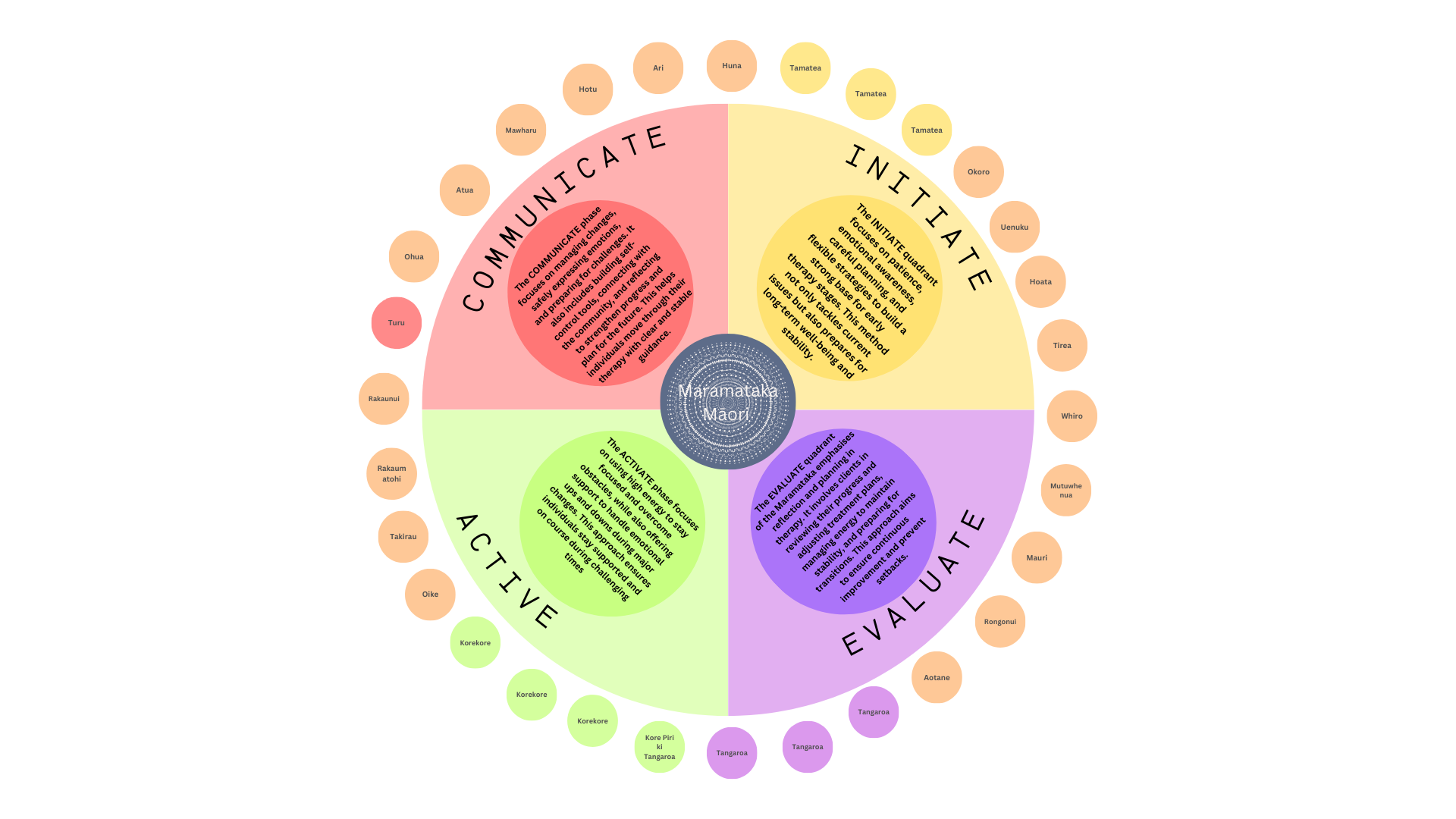
Nāu te rourou, nāku te rourou, ka ora ai te Iwi. Thriving communities require collective contributions.
For a long time, much of our health system has been designed to respond once something has already happened.
Someone reaches crisis. A whānau asks for help. A referral is made. A service responds.
Prevention asks us to look earlier than that.
Within Healthy Families Whanganui Rangitīkei Ruapehu, our exploration of Maramataka Māori has increasingly challenged us to think about what “earlier” might actually mean. Not simply earlier access to a service, but earlier recognition of the relationships, conditions and rhythms that surround wellbeing.
This has been a long journey, not a single project.
What began through the revitalisation and everyday practice of maramataka grew into observation, community engagement, data patterning and research. Over time, we began asking whether the patterns being observed through practice could also be seen within the information our systems were already collecting.
That question opened another.
If we can recognise patterns around distress, what responsibility do we have to act before those patterns become crisis?
From pattern to prevention
Maramataka is sometimes reduced to a calendar of lunar phases. In practice, it asks much more of us.
It requires us to observe.
To notice changes in ourselves and the environments around us. To understand that wellbeing does not occur separately from whenua, wai, weather, season, relationships, whakapapa or the wider conditions in which we live.
Through the Growing Collective Wellbeing kaupapa, this way of thinking began to sit alongside regional crisis information. Patterns could be explored across time, not to suggest that a maramataka phase causes distress, nor that crisis can simply be predicted by looking at the moon, but to ask whether there were recurring periods and conditions that deserved closer attention.
That distinction matters.
Patterning is not prediction.
A pattern gives us something to investigate. Mātauranga gives us another way of interpreting what we are observing. Practice helps us understand what that knowledge might mean in the lives of whānau. Together, they create an opportunity to ask better questions about prevention.
The research published through Te Manunui: Toi Tangata journal: Phase Patterning and Prevention Aligning Mental Health Crisis Patterns with Te Maramataka Māori: An Indigenous Temporal Framework from Aotearoa, has helped us articulate this emerging thinking more carefully. The forthcoming Maramataka Patterning artefact takes another step, translating years of observation and analysis into something that can be seen, discussed and questioned.
But the artefact is not the end point.
It is an invitation to think differently about when prevention begins.
Prevention already happens in relationship
At the same time this work has been developing, Growing Collective Wellbeing has been asking another practical question: what helps whānau and communities respond when somebody begins to experience distress?
A Practical Guide for Responding to Wellbeing and Distress grew from that kaupapa.
Its premise is deliberately simple. Often the first person to notice that something is changing is not a clinician.
It is a partner.
A friend.
A workmate.
A neighbour.
A whānau member who knows that something does not quite feel right.
That act of noticing is important.
Because prevention does not always begin with an intervention. Sometimes it begins with recognising that something has shifted and having the confidence, relationships and resources to respond.
This is where the Practical Guide and our maramataka mahi begin to speak to one another.
One strengthens our ability to recognise and respond to distress within our relationships.
The other asks us to become more attentive to patterns across time, environment and collective experience.
Together they lead us toward a larger systems question:
If whānau can learn to notice and respond earlier, can our systems learn to do the same?
Building a Maramataka Prevention Framework
This question now sits at the centre of the next stage of the mahi.
The emerging Maramataka Prevention Framework is not being developed as a tool for predicting when harm will occur. Nor is it an attempt to apply one maramataka universally across communities.
Maramataka is inherently relational and place-based.
Instead, the framework explores how the principles of observation, rhythm, relationship and timely response might strengthen prevention practice.
It asks us to consider what happens before crisis becomes visible to the formal system.
What are whānau noticing?
What are practitioners noticing?
What is happening within Te Taiao?
Where are relationships beginning to shift?
And what might become possible if our systems could respond to those signals earlier?
For Healthy Families WRR, this represents an important evolution in our systems-change journey.
We began by creating space for mātauranga Māori within prevention conversations.
The challenge now is greater.
It is not simply about bringing mātauranga into the existing system. It is about allowing Indigenous knowledge systems to challenge how that system understands evidence, time, relationship and prevention in the first place.
What if prevention is maintaining balance?
Perhaps prevention does not always begin with identifying risk.
Perhaps sometimes it begins by maintaining the relationships and conditions that allow wellbeing to flourish.
This is where the journey through maramataka takes us.
From remembering.
To observing.
To recognising patterns.
To asking how we act on what we notice.
The forthcoming Maramataka Patterning artefact makes one part of that journey visible. The research provides another layer of evidence. The Practical Guide puts prevention into the hands of whānau and communities. And the emerging Maramataka Prevention Framework asks what these learnings could mean for the systems surrounding them.
None of these pieces stand alone.
Together, they are helping us explore a different proposition for prevention:
What becomes possible when we stop waiting for crisis to tell us something is wrong, and become better at recognising and responding to the relationships, rhythms and conditions that help keep us well?