Whāngaia kia tupu, kia puāwai. Nurture them so they may grow and flourish.
If the aspiration is for mokopuna to grow and flourish, then the responsibility cannot sit with one service, one organisation, one workforce or even one generation.
The conditions for mokopuna to thrive are shaped by the system around them: by the way services connect, the decisions that are made, where resources are directed, whose knowledge and experiences inform those decisions, and our collective willingness to change when the system is not working as it should.
The contribution of the Mokopuna Ora Strategic Leadership Group is to help shape those conditions.
So, what does a Strategic Leadership Group do?
The words Strategic Leadership Group can conjure up images of governance, reports and another meeting around another table.
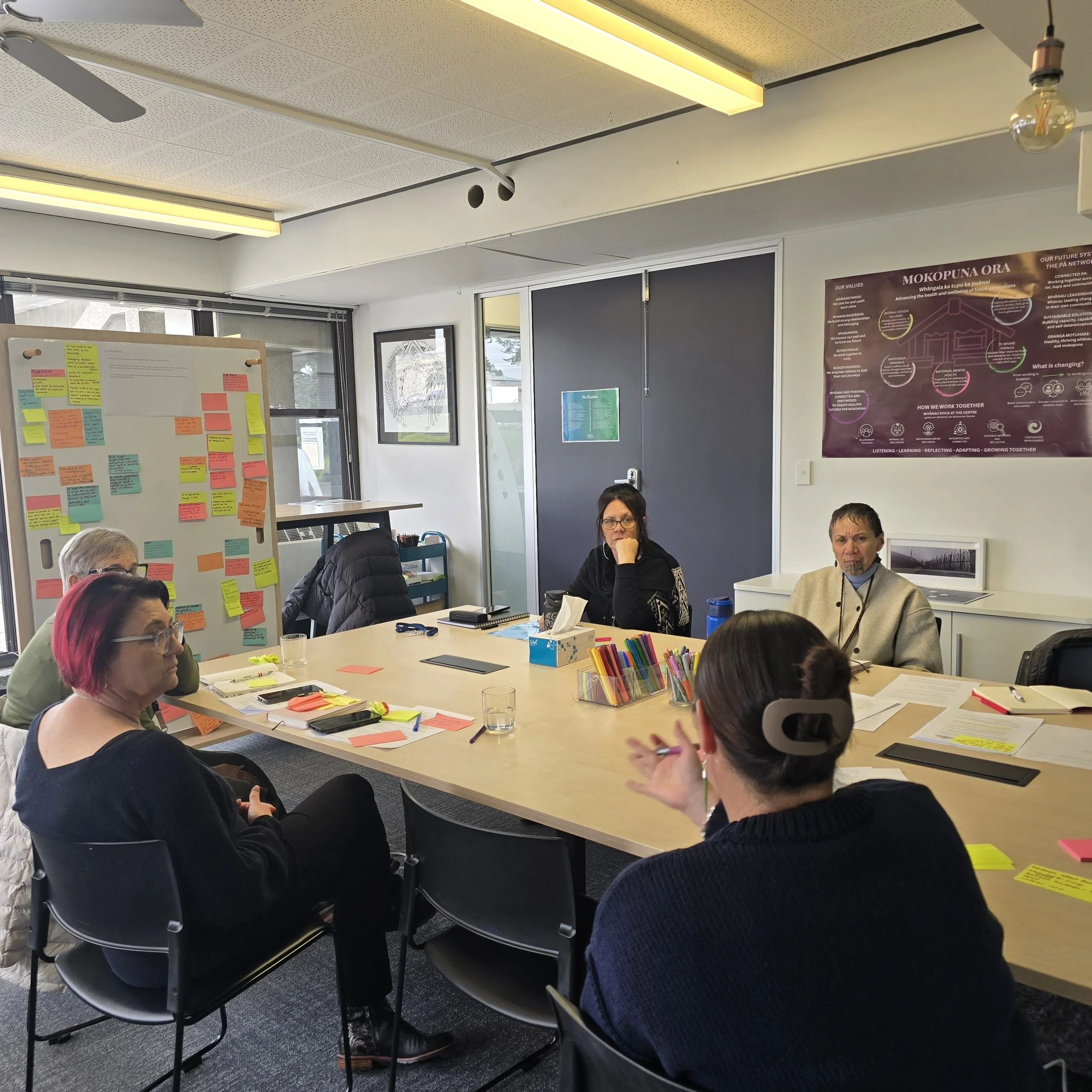
And sometimes, quite literally, it is people sitting around a table.
But the value is in what happens around that table and what happens beyond it.
The Mokopuna Ora Strategic Leadership Group brings together people who hold different knowledge, perspectives, relationships, responsibilities and spheres of influence across the system. It creates a space to step outside individual services and organisations and look at the system together.
To bring what we are hearing and learning from whānau into the same conversation. To consider different perspectives. To have honest and robust kōrero about what is working, what isn't, where the gaps are, and where opportunities for change exist.
It is about making sense of the system together, while remaining grounded in the experiences, aspirations and priorities of whānau.
Whānau voice, whānau leadership.
Central to Mokopuna Ora is the understanding that whānau are not simply people we listen to, consult with, or design services with.
Whānau hold knowledge about their own lives, their mokopuna and what wellbeing looks like for them. Their voice, knowledge and lived experience must have influence in determining what needs to change and how that change is shaped.
The role of the SLG is not to sit above whānau and make decisions on their behalf. Its role is to help create the conditions in which whānau voice can influence the system and whānau can participate meaningfully in the decisions that affect them.
The people around the SLG table hold relationships, responsibilities and influence in different parts of the system. With that comes both an opportunity and a responsibility: to carry what is being heard and learned from whānau into the places where priorities are set, decisions are made and resources are directed and to challenge the system when those decisions do not reflect what whānau need to thrive.
In this way, strategic leadership becomes less about holding decision-making power and more about using influence to shift where power sits, whose knowledge counts and how decisions are made.
From connection to collective responsibility
Connection on its own is not enough. The value of bringing people together is in what becomes possible through that connection.
Different perspectives, grounded in whānau knowledge and experience, build shared understanding. Shared understanding creates greater clarity about what needs to change. And with that comes collective responsibility, recognising that while no one person or organisation holds the whole system, everyone has a part to play in changing it.
That might mean influencing a decision, connecting people or kaupapa that have previously sat apart, challenging an existing way of working, opening a door, shifting a priority, advocating in another space, or making a commitment to act.
Each member of the SLG carries their relationships, responsibilities and influence beyond the hui. What is understood together around the table can therefore travel into other conversations, organisations, decisions and parts of the system.
Whānau voice and leadership → connection → shared understanding → collective responsibility → influence and decisions → action and movement → conditions for mokopuna to thrive.
Leadership that creates movement
This is where strategic leadership becomes more than conversation.
Mokopuna Ora requires leadership across the system, leadership that connects people and perspectives, centres whānau voice and leadership, builds shared understanding, and turns that understanding into influence, decisions, commitments and collective action.
The SLG does not create systems change on its own. Change is collective, and the system is bigger than any one group, organisation or kaupapa.
Its contribution is to strengthen the conditions for change: creating alignment, building relationships across boundaries, strengthening the influence of whānau in system decision-making, identifying where collective influence can be exercised, and supporting movement across the system.
And sometimes that begins quite literally with people around a table.
At our recent Mokopuna Ora SLG hui, that meant post it notes covering the walls, different perspectives being brought forward, questions being asked, honest and robust conversations, connections being made, and people considering where their collective leadership needs to go next.
Because ultimately, the system we influence today will help shape the experiences and opportunities of whānau, mokopuna and the generations that follow.
Whāngaia kia tupu, kia puāwai. That is the bigger responsibility and the opportunity of collective strategic leadership for Mokopuna Ora.