

Hapūtanga Wānanga creates early relational pathway into an interconnected maternal health and wellbeing system.
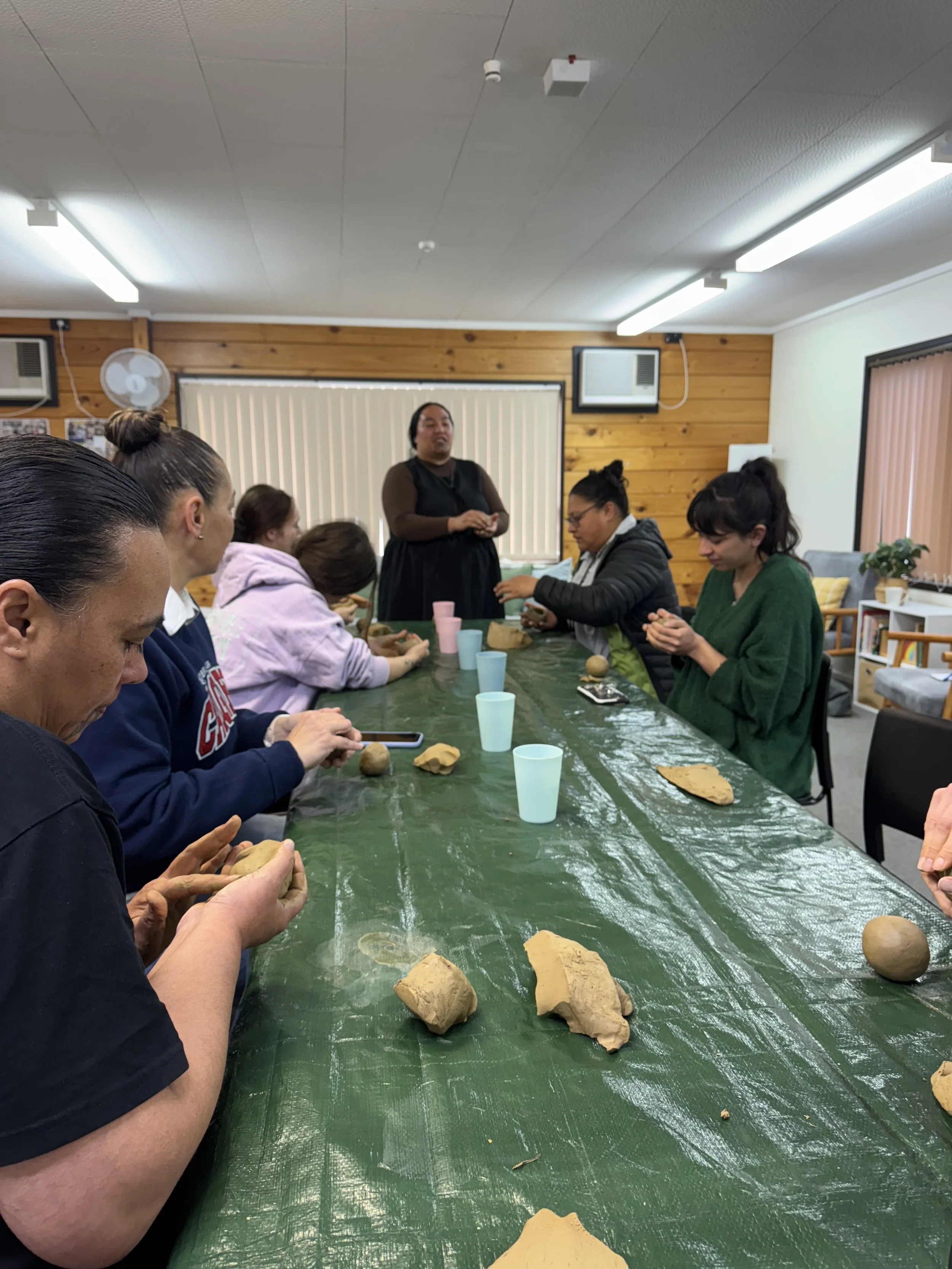
Held at Te Whare Piringa, Hapūtanga Wānanga provides a kaupapa Māori approach to antenatal education, connection and preparation for hapūtanga, birth and the journey into parenthood.
But it has become much more than antenatal education.
For many māmā and whānau, Hapūtanga Wānanga is their first introduction to Te Whare Piringa. They may arrive wanting to learn more about their hapūtanga or prepare for the birth of their pēpi, but from the moment they enter the whare they begin experiencing a wider network of relationships, knowledge and support.
Through whakawhanaungatanga, māmā and whānau become familiar with kaimahi, kaupapa and the supports that exist within and around Te Whare Piringa. Questions can emerge naturally through kōrero. Connections can be made without whānau needing to know which service to approach or which door to knock on.
A need might lead to a conversation. A conversation might lead to a connection or warm handover. Support can begin early.
No referral maze. No wrong door.
This is care beginning to organise itself around whānau.
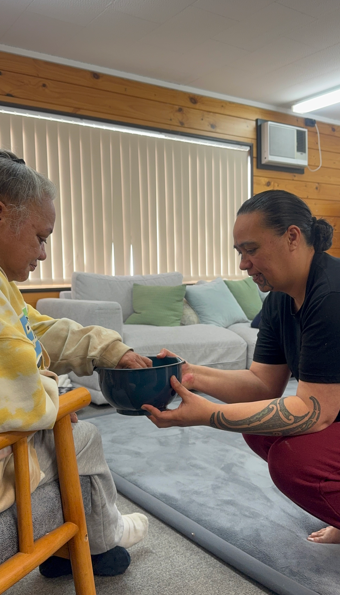
At last week's Hapūtanga Wānanga, māmā, whānau, kaimahi and tauira came together for learning around labour and birth, mirimiri and ukutangi. Hands-on activities created opportunities to share mātauranga, lived experience and kōrero between generations.
One māmā described Hapūtanga Wānanga as giving her “wisdom and insight” within an environment that felt comforting and where she was able to share kōrero.
For one nanny attending alongside her whānau, the experience highlighted how much has changed between generations.
“I never had a village of support, but I was very fortunate to have a supportive partner, so it is a blessing to be here with my tamariki, and I am grateful that I am able to be here for my mokopuna.”
She also reflected: “I love this space; we never had anything like this when I was having my children. So, my children are very fortunate that this is here.” These reflections speak to something bigger than the information shared during an antenatal class.
They speak to connection, collective responsibility and prevention.
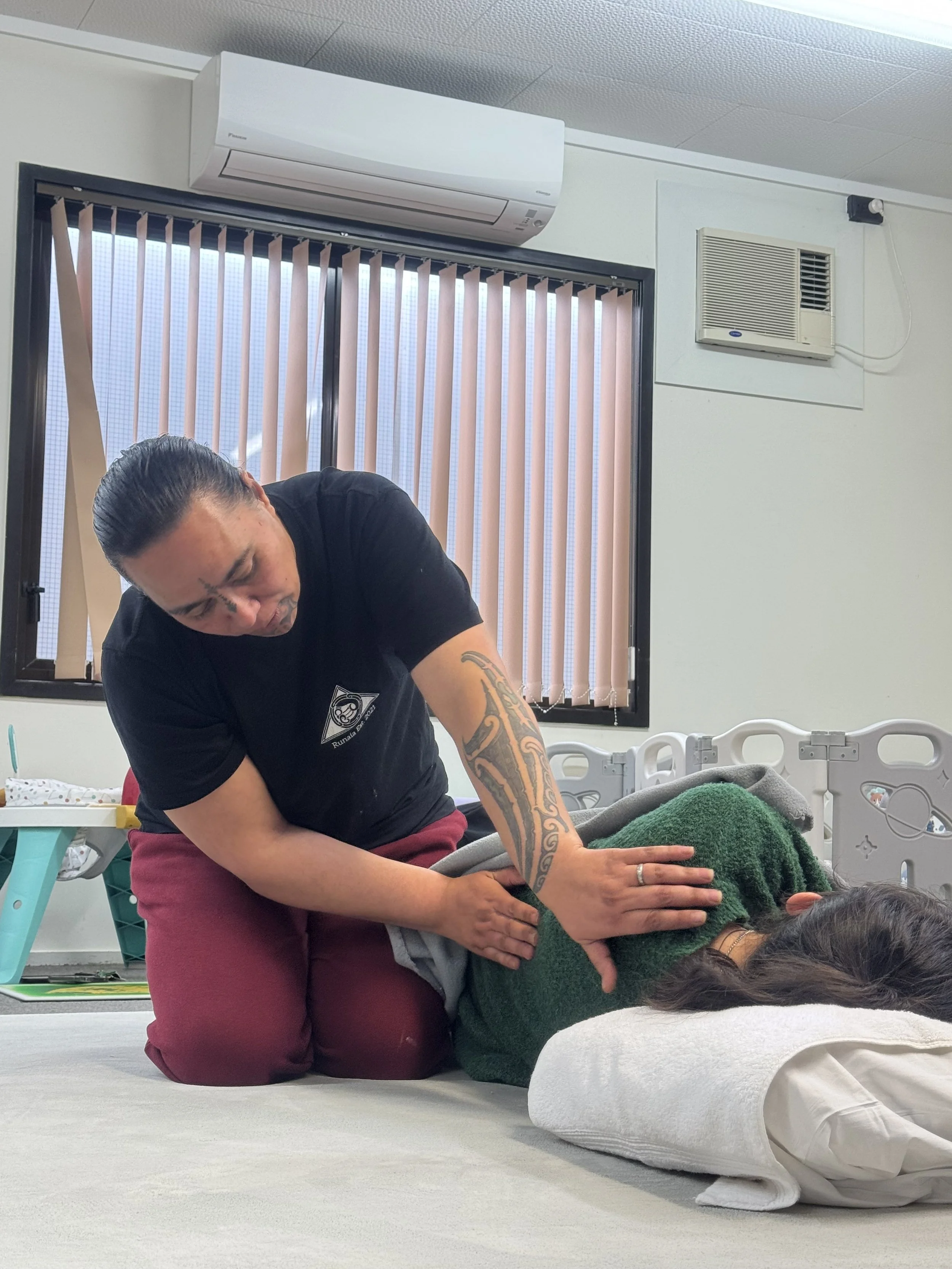
Hapūtanga Wānanga has steadily developed as an alternative pathway for antenatal education grounded in mātauranga Māori. Whānau have told us that the ability to return to a welcoming, grounded space allows them to learn not only from facilitators, but from the lived experiences of other māmā and whānau.
It also creates learning beyond those attending as hapū māmā. After participating in the wānanga, one student midwife reflected that understanding the tikanga and processes surrounding mirimiri gave her knowledge she could now share with the whānau she works alongside.
This is important systems learning.
When knowledge and relationships move beyond an individual programme or service, capability begins to grow across the wider system.
In our previous story, Te Whare Piringa: A Package of Care ( Te Whare Piringa: A Package of Care — Healthy Families WRR), we described Te Whare Piringa as a place-based village within the Pā Network: an interconnected system where clinicians, kaimahi, mātauranga Māori, lived experience and whānau come together in collective care.
Hapūtanga Wānanga allows us to see what that looks and feels like in practice.
It is not simply about bringing different services or kaupapa into the same building. It is about creating the relationships and conditions that allow support to move around whānau.
Hapūtanga Wānanga provides an early relational pathway into that system, building trust during hapūtanga, strengthening mātauranga Māori, growing networks of support and creating opportunities for connection and prevention long before whānau might otherwise reach the door of a service.
It is about creating the relationships and conditions that allow care and support to move around whānau.
Whāngaia kia tupu kia puāwai