

"Once I felt listened to, everything slowed down a bit. I wasn't in panic mode anymore." – Whānau
Sometimes, prevention begins with something as simple as feeling heard.
Not because every problem has been solved. But because someone took the time to listen. To understand. To walk alongside you. That moment matters.
It reminds us that toxic stress isn't only about the challenges people face. It's also about whether people have the support, relationships and opportunities they need to get through them.
Looking beyond the crisis
Every day, whānau carry worries that most of us never see. The pressure of paying the bills. Supporting a child who is struggling. Finding somewhere safe to live. Navigating services that feel confusing. Caring for loved ones while trying to hold everything else together. On their own, these challenges are hard. When they build up over time without enough support, they can become something much bigger.
This is what we know as toxic stress. For too long, we've focused on what happens when people reach crisis. But what if prevention starts much earlier? What if it starts by creating communities where people have fewer worries to carry?
Learning from our community
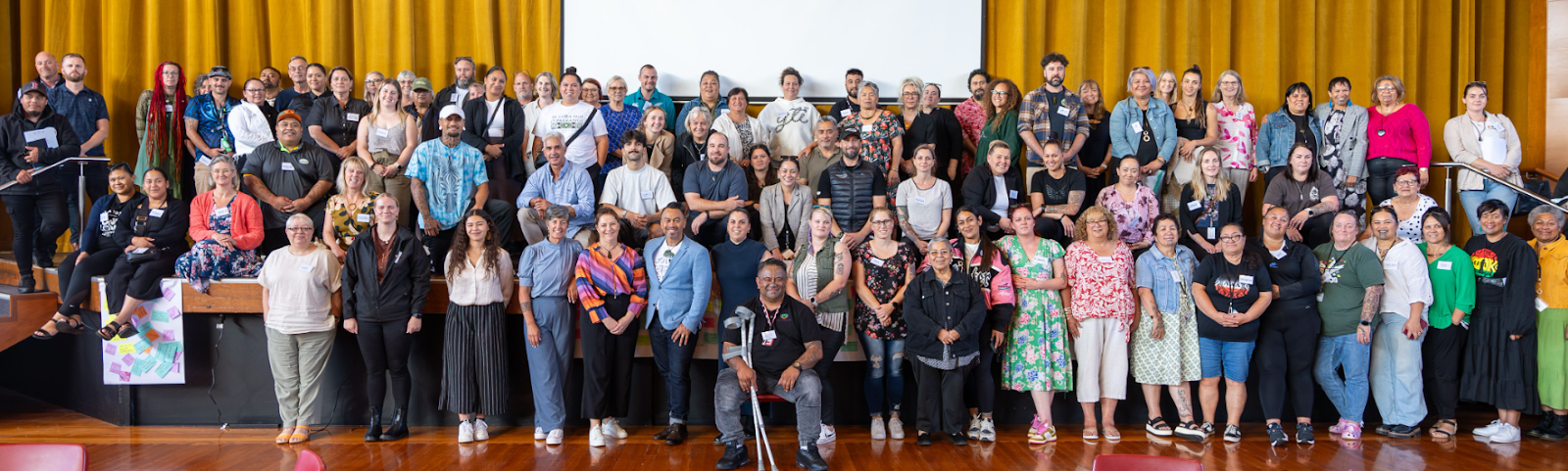
Over the past year, Healthy Families Whanganui Rangitīkei Ruapehu has been working alongside local partners to better understand how communities can reduce the impacts of toxic stress and grow collective wellbeing.
As part of this Kaupapa, Healthy Families Whanganui Rangitīkei Ruapehu commissioned Point & Associates to independently evaluate two locally led initiatives.
The first, He Ara Hauora, explored Sport Whanganui's Kaupapa Māori approach to supporting tamariki who need a different kind of support through trusted relationships, movement, culture and connection in schools.
The second explored Hāpai Mauri Tāngata, a Kaupapa Māori Community-led or collaborative prototype with NZ Police that walks alongside tangata whaiora and whānau experiencing crisis within the Justice system, by prioritising practical support, advocacy and trusted relationships.
Although these initiatives worked in different places and with different people, both evaluations reached the same conclusion.
People feel relief when they are heard.
When someone helps by listening, hearing and then helping to practically remove stressors that may be on top.
People thrive when they feel safe.
When they belong.
When they are connected to culture.
When they have trusted relationships.
When someone believes in them.
The evaluations found these are not simply "nice to have". They are the conditions that help reduce the impacts of toxic stress while strengthening confidence, emotional wellbeing, relationships and participation in everyday life.
Prevention belongs to all of us
One of the biggest lessons from this work is that prevention isn't something one organisation can deliver alone.
It belongs to all of us.
It happens in schools where tamariki feel safe enough to learn. On sports fields where young people discover confidence and belonging. At the marae where culture and identity are strengthened. Through organisations that walk alongside whānau without judgement. In workplaces that recognise people bring their whole lives to work. In neighbourhoods where people know each other and look out for one another. Every one of these places can either add another stressor to someone's life or become a protective factor against toxic stress.
One simple question
Perhaps the most important question we can ask ourselves is a simple one.
What is one worry we can take away from whānau? Can we make it easier to access support? Can we make it more affordable for children to participate in sport? Can we create spaces where people feel welcome and connected? Can we design our services so they're easier to navigate? Can we work together instead of expecting whānau to do it alone? No single action will solve everything. But every barrier we remove makes life a little easier. Every positive relationship creates another layer of support.
Every organisation that works alongside others strengthens the communities we all belong to.
Growing Collective Wellbeing
Growing collective wellbeing isn't about asking people to become more resilient while life becomes harder. It's about creating communities where people have the conditions they need to thrive.
Communities where people feel connected.
Communities where people belong.
Communities where fewer people experience toxic stress because we've worked together to reduce the pressures that cause it.
We all have a role to play. Because prevention isn't something we do to communities. It's something we build with them. And sometimes, it starts with something as simple as taking one worry away.